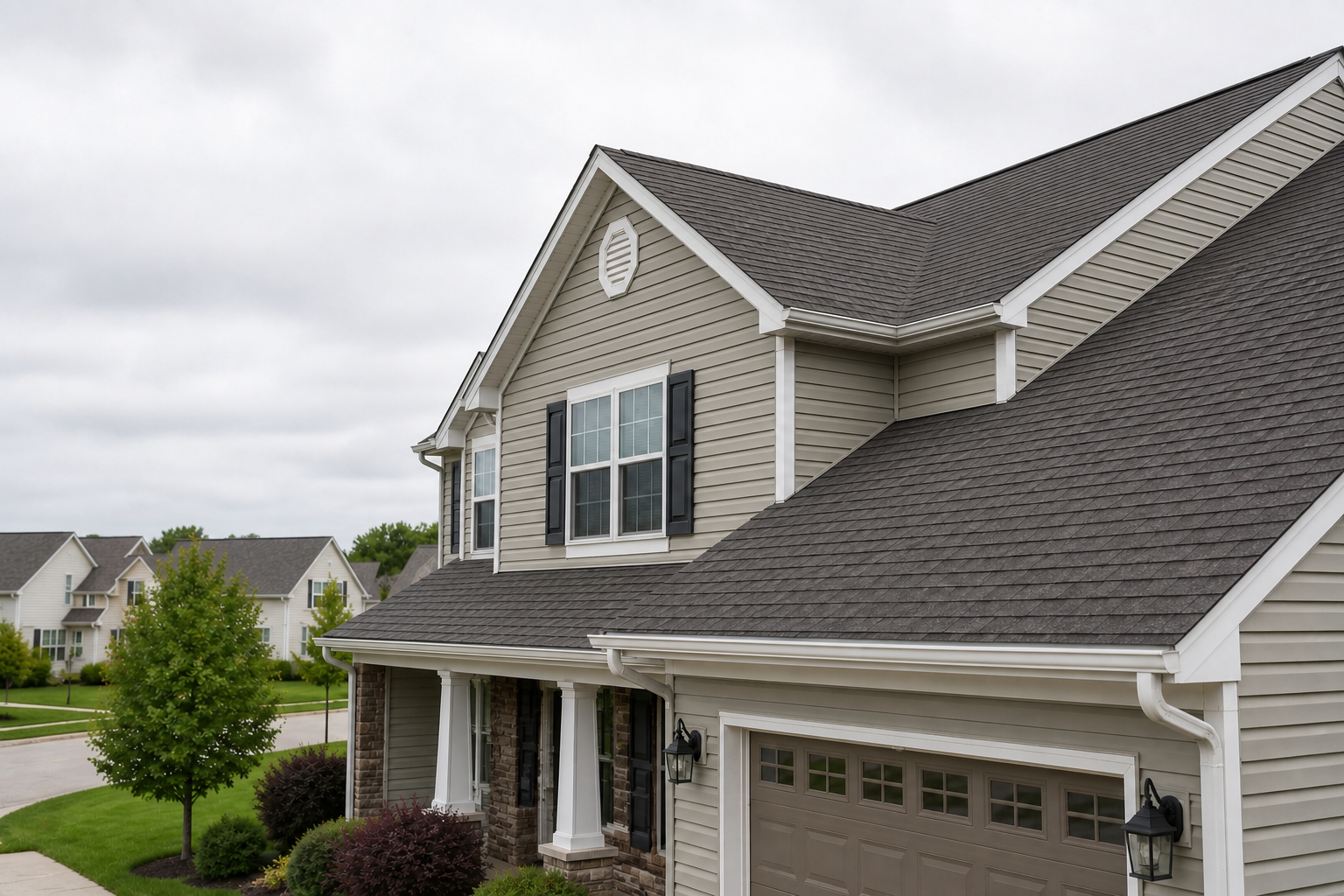
Why limb contact matters
A branch that rests against a roof in the wind wears through the granule coating on a shingle in the exact spot it touches, year after year, until that shingle fails well ahead of the rest of the roof. The same contact deposits leaves and pollen in that spot, which holds moisture against the shingle even on dry days.
Overhanging limbs also drop leaves and small debris into gutters constantly, which is a large share of the clogged gutter calls we see across Richmond's older tree lined streets.
Crown thinning done correctly
Selective thinning removes crossing branches and deadwood from inside the canopy rather than simply cutting back the outer edge, which keeps the tree's natural shape while reducing the weight and wind resistance that lead to limb failure in a storm.
Topping, where the entire crown is cut flat, is not something we do. It weakens the tree, triggers weak regrowth that is more likely to fail later, and rarely solves the actual roof contact problem it was meant to fix.
Timing pruning around Richmond's seasons
Late winter, before new growth starts, is generally the best window for structural pruning, since the tree's shape is easiest to see without leaves and wounds heal into the coming growing season. Storm damaged limbs get addressed whenever they occur rather than waiting for the ideal season, since a hanging limb is a hazard regardless of the calendar.
How often a tree near the roof needs attention
A fast growing species positioned close to a roofline, common in newer plantings around Short Pump and Glen Allen, may need a check every year or two until its growth rate slows. A mature, slow growing hardwood over an older Fan or Church Hill roof might go five years or more between prunes if nothing has changed.
The roof itself is often the best early warning sign. Granule buildup in one section of gutter, or a scrape mark appearing on a shingle that was not there the year before, usually means a nearby limb has grown enough to make contact and a prune is due.