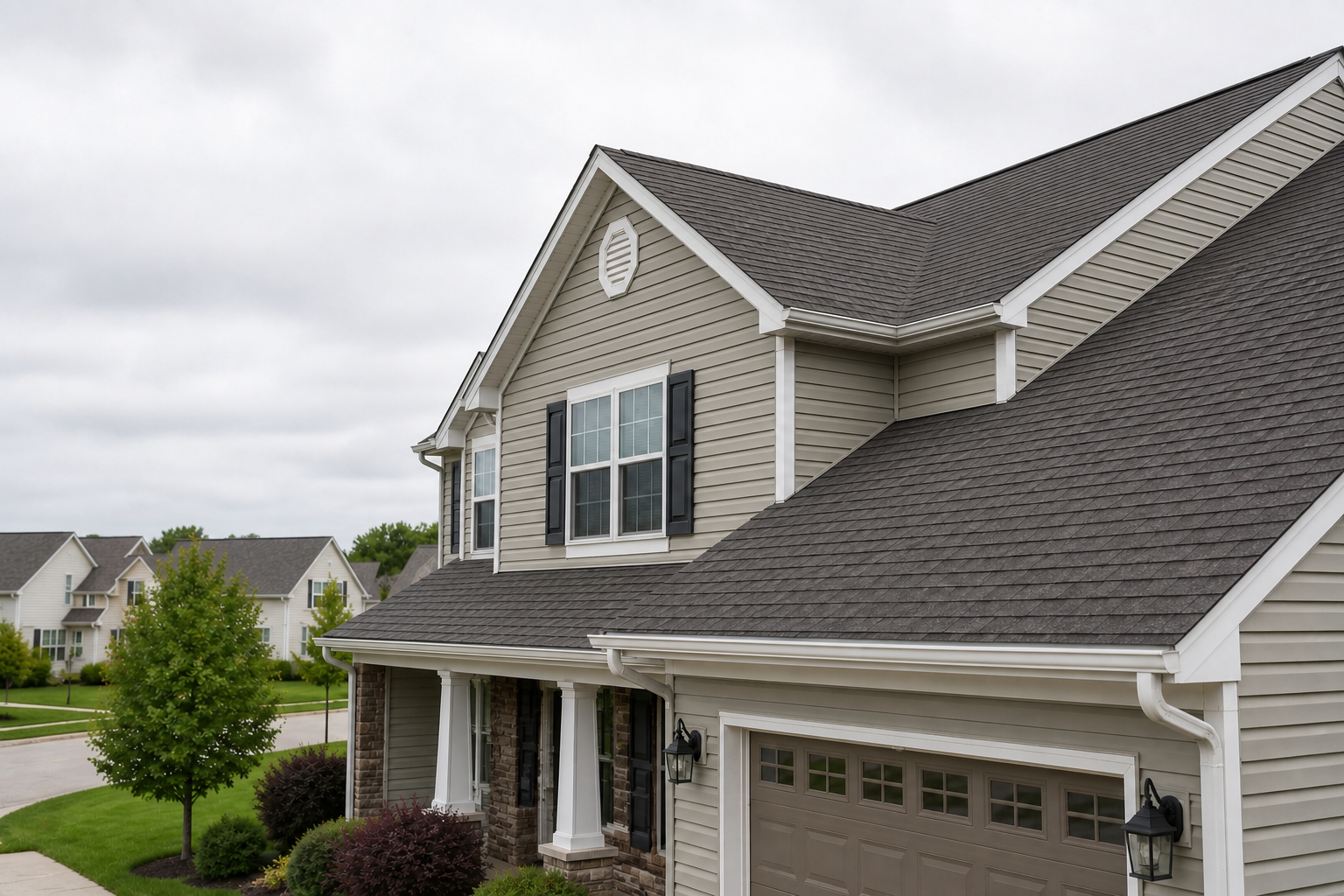
Tracing a leak to its source
Water travels sideways along rafters and decking before it drips through drywall, so the stain on a bedroom ceiling can sit six feet from where the roof is actually failing. The first step on any repair call is getting on the roof, not just under it, to look at flashing, pipe boots, valleys and the shingles around any penetration.
Pipe boots are the single most common failure point on a Richmond roof. The rubber collar that seals around a plumbing vent dries out and cracks after eight to ten years of sun, well before the shingles around it are due for replacement. A cracked boot lets water in during every rain and is one of the cheapest fixes on the roof once it is found.
Flashing around chimneys and where a lower roof meets a wall is the second common source. Older step flashing can work loose or get covered in caulk by a previous repair that treated the symptom instead of resealing the joint properly.
What a repair visit includes
The roof gets walked, not just viewed from a ladder at the eave, because problems at the ridge or in a valley are invisible from the ground. Any soft decking found under damaged shingles gets flagged before the shingle repair is priced, since covering rotten plywood with new shingles just delays a bigger job.
Repairs are itemized in writing: what was found, what is being fixed, and what materials are going on. A homeowner should be able to read the scope and understand exactly what happened to their roof.
Repair versus replacement
A roof with most of its service life left and one bad valley or a handful of cracked boots is a repair candidate. A roof past 20 years with granule loss across multiple slopes and more than one active leak is usually past the point where patching makes financial sense.
That call gets made on the roof, based on the age of the shingle, the number of layers already on the deck, and how much decking has already gone soft. See the repair versus replace guide for the fuller breakdown of that decision.