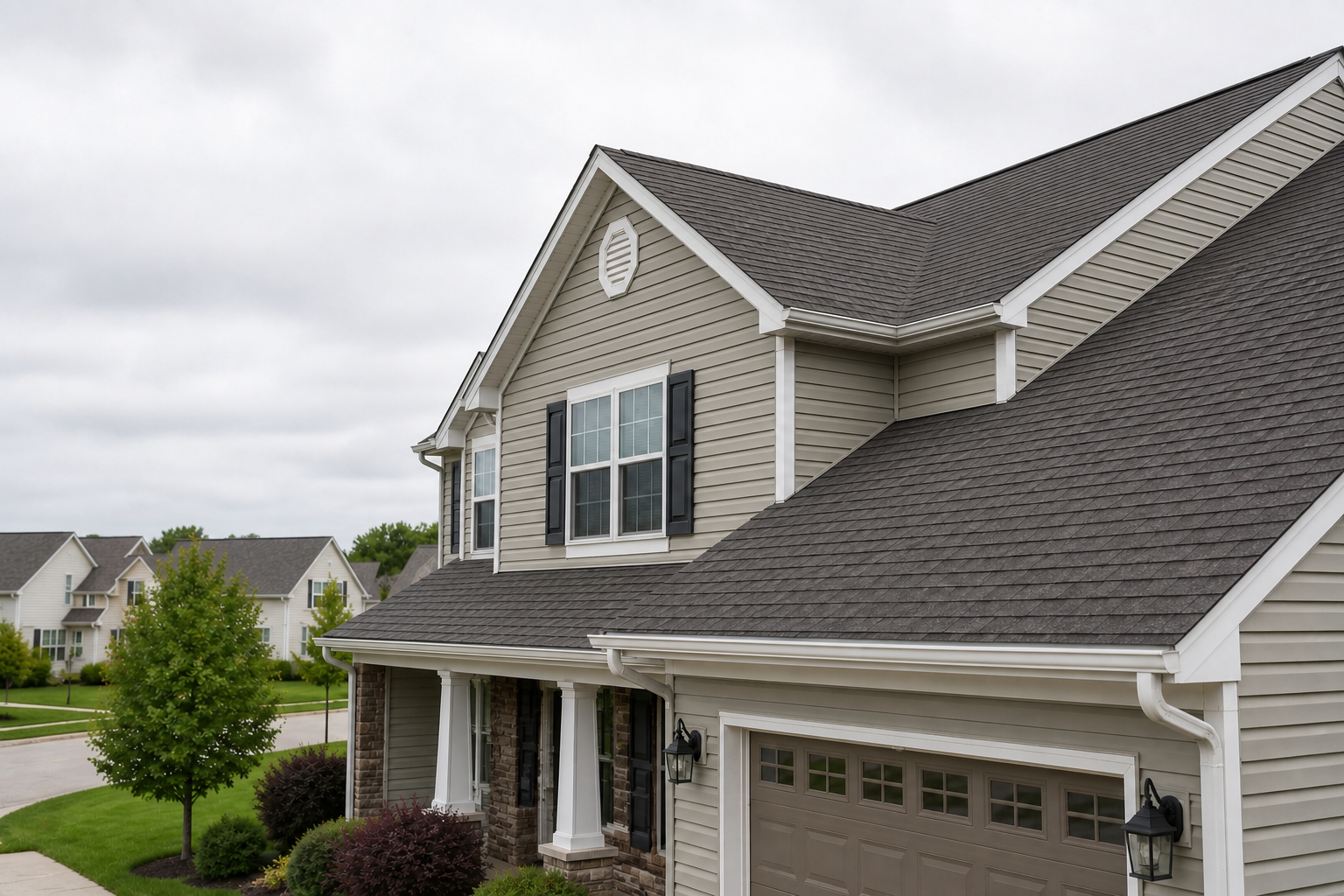
Henrico's mix of old and new
Henrico stretches from older, established neighborhoods with mature oak and poplar canopy that has been dropping limbs on the same rooflines for decades, out to newer construction around Glen Allen where the trees are still young and the shingles are usually the original builder grade.
Pump Road and the corridor running toward Twin Hickory has seen enough building in the last fifteen years that we are starting to see the first wave of those roofs reach the point where granule loss and curling edges show up on an inspection, right on schedule for a three tab shingle nearing the end of its life.
Chesterfield and the ground under the roof
Chesterfield runs from the wooded lots around Midlothian to older, tree lined streets in Bon Air, where houses built well before the newer subdivisions sit under some of the tallest hardwood canopy we work under anywhere in the area. Robious Road and Buford Road cut through a stretch of Bon Air where a single mature oak can shade three or four roofs at once.
The heavier clay ground common through much of the county holds rainwater near the surface longer than the sandier soil closer to the river, and a tree that has stood through a decade of ordinary storms can still come down after one unusually wet stretch loosens its root ball.
Hanover and the Mechanicsville side of the line
Mechanicsville and the stretch of Hanover County closest to the city line carry less mature tree cover than Midlothian or Bon Air, so wind does more of the direct work on a roof out there than falling limbs do. A straight line wind event along the Route 360 corridor tends to lift shingles and tear at ridge caps rather than drop a tree on anyone's house.
Newer construction along that corridor means fewer tree calls and more roofs still inside their expected service life, so a lot of the work out that way traces back to a storm rather than to age catching up with the shingle.
How the weather moves through the ring around the city
Summer storm cells tend to build to the west and move east through the afternoon, so a call about hail or wind damage in Short Pump or Glen Allen often comes in an hour or two before the same storm reaches Church Hill or the far side of Chesterfield. Knowing that pattern helps us stage a crew closer to where a storm is likely to land next.
Winter runs the opposite pattern. A hard freeze settles in evenly across the whole ring at once, and the calls that follow tend to be about a pipe boot or flashing joint that finally gave out under the cold.
Why one crew running the whole loop matters
A homeowner in Glen Allen and a homeowner in Bon Air are not comparing notes on their roofs, but we are looking at both the same week, which means a pattern on one side of the county line, a batch of pipe boot failures after a cold snap, a run of hail calls after a July storm, gets noticed faster than if the work were split across crews that never talked to each other.
Running the same inspection and the same written scope on every one of those calls, whether the lot is a wooded acre in Midlothian or a tight yard in Bon Air, keeps the standard consistent even though the roof in front of us changes from one stop to the next.
What stays true no matter which county
Roof age, tree age and soil all shift block to block across this ring, but the questions we ask on a first visit do not change with the county line. What shape the roof is in, what is growing over it, and which one needs attention first is still the starting point whether the call comes from a Henrico cul de sac or a Bon Air street shaded by a hundred year old oak.