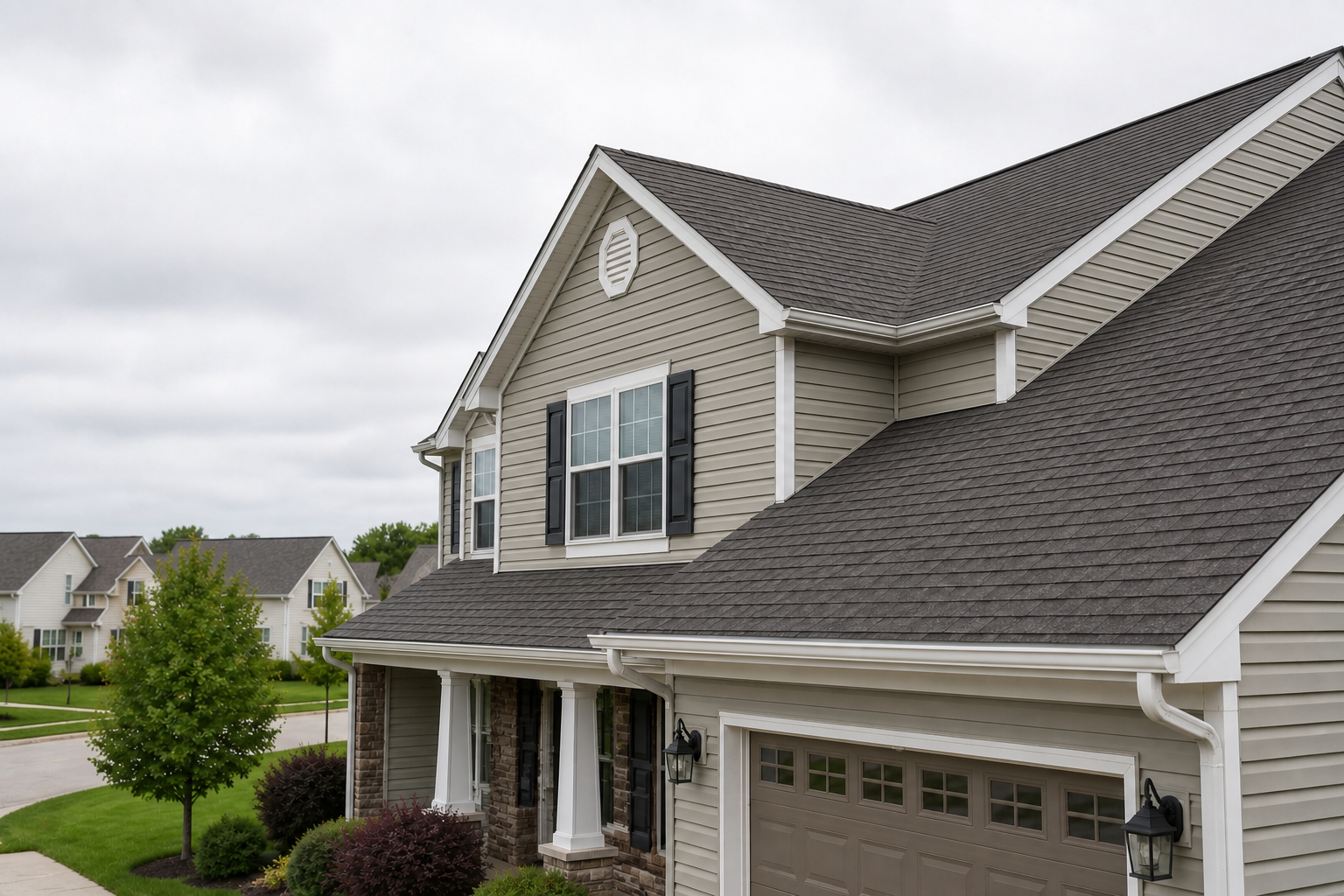
Steep roofs and steep lots
Many Church Hill homes sit on lots that slope sharply from the street, which affects how equipment and material get onto the roof safely. A standard ladder setup that works on a flat suburban lot often needs to be rethought here.
Roof pitches in the neighborhood also run steeper than average, a common feature of the Victorian and Colonial Revival houses built through the neighborhood's early development, which changes both the safety approach and the shingle nailing pattern used on a tear off.
Drainage on a hillside lot
Water that a gutter fails to catch on a hillside property does not just pool near the foundation, it runs downhill and can affect a neighbor's yard or a retaining wall below. Getting gutter pitch and downspout placement right matters more here than on flatter ground.
Storm water running off a poorly maintained roof has been known to erode soil around foundations on the steeper Church Hill streets over several seasons, which is a slower and easier to prevent problem than most homeowners realize until it shows up as a cracked walkway.
Storm response in the neighborhood
Church Hill's tree canopy and older electrical infrastructure mean storm damage calls here often involve both a downed or damaged limb and a roof issue at the same time. Having one crew assess both saves a homeowner from coordinating two separate visits during an already stressful week.
Older homes, mixed roof ages
Because Church Hill has seen waves of renovation over several decades, it is common to find one house with a roof replaced five years ago next door to one that has not been touched since the 1990s. Age assumptions based on the block are not reliable here, which is part of why every inspection starts from scratch rather than from what a neighbor's roof looked like.
Historic character also plays into material choice on some Church Hill streets, similar to the Fan, so a replacement scope here often notes whether a district review applies before ordering shingles.